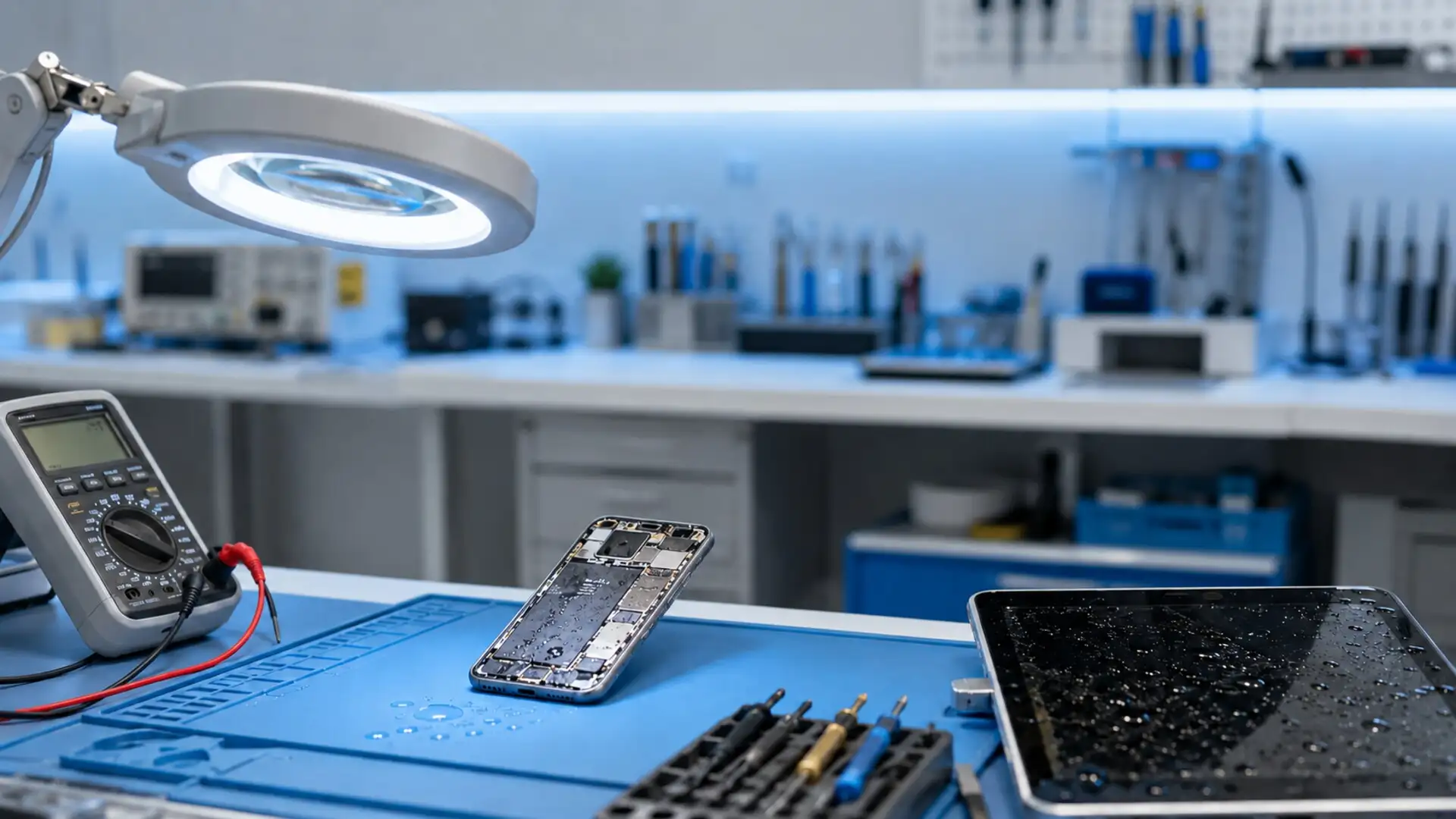
Water Damage Repair and Solutions Water or liquid entering a phone, tablet, laptop or gaming console can quickly affect its internal components. Even when a device continues working after exposure, moisture trapped inside may cause corrosion, charging problems, screen faults, overheating or complete failure later. Gisborne Tech Repair Hub provides professional water-damage assessment and repair services in Gisborne. We inspect the device carefully, identify affected components and explain the available repair or data-recovery options before beginning any work. What Happens When Water Enters a Device? Electronic devices contain closely connected circuits, cables, batteries and other sensitive components. When liquid reaches these parts, it can create electrical shorts and interfere with normal power flow. Salt water, soft drinks and other sugary liquids can be especially damaging because they leave corrosive residue behind. The effects of liquid exposure are not always immediate. A device may appear normal for several hours or days before developing charging, display, sound or performance problems. Acting quickly can reduce further damage and improve the possibility of a successful repair. Common Signs of Water Damage A water-damaged device may not turn on, charge correctly or respond to touch. Other warning signs can include screen lines, flickering, distorted sound, camera condensation, overheating, unexpected restarts or rapidly decreasing battery life. Some devices display a moisture warning when liquid is detected inside the charging port. If this message appears, disconnect the charger immediately and allow a technician to inspect the device before attempting to charge it again. Common warning signs: Device does not turn on Charging port not working Flickering or unresponsive screen Distorted speaker or microphone sound Camera lens condensation Unexpected shutdowns or restarts Excessive heat or rapid battery drain Moisture-detection warning What to Do Immediately After Liquid Exposure Remove the device from the liquid and switch it off as soon as it is safe to do so. Disconnect the charger, headphones, USB cables and other accessories. If possible, remove the protective case, SIM card and memory card without forcing the device open. Keep the device in a dry and ventilated place, and take it to a repair technician promptly. Tell the technician what type of liquid was involved, when the exposure happened and whether the device was used or charged afterward. Immediate steps: Remove the device from the liquid Turn it off immediately Disconnect all cables and accessories Remove the case, SIM card and memory card Wipe the exterior with a soft, dry cloth Keep the device in a ventilated location Arrange a professional assessment quickly What You Should Not Do Do not connect a wet device to a charger or continue testing whether it still works. Applying power while moisture remains inside can cause additional electrical damage. Avoid pressing buttons repeatedly because this may push liquid further into the device. Do not use a hair dryer, heater, oven or direct sunlight to dry the device. Excessive heat can damage the battery, screen, seals and internal adhesives. Placing the device in rice is also unreliable because rice cannot properly remove moisture or residue from internal components. Avoid these actions: Do not charge the wet device Do not repeatedly turn it on Do not shake or hit the device Do not use a hair dryer or heater Do not place it inside an oven Do not rely on uncooked rice Do not open the device without suitable tools Phone Water-Damage Repair Phones are commonly exposed to rain, drinks, sinks, bathrooms and accidental spills. Liquid can affect the screen, charging port, cameras, speakers, microphones, battery and main circuit board. Even water-resistant phones can become damaged if their seals are worn, previously repaired or exposed beyond their rated limits. Our technicians inspect the phone and look for moisture, corrosion and damaged connections. Depending on its condition, the solution may involve internal cleaning, connector treatment, charging-port repair, battery replacement, screen replacement or board-level assessment. Tablet and iPad Water-Damage Repair Tablets and iPads have large screens and batteries, and liquid can spread across a wide internal area. Common problems include touch-screen failure, display lines, charging faults, weak sound, battery problems and devices that no longer start. We assess the affected tablet before recommending repairs. The device may require internal cleaning or replacement of the screen, battery, charging assembly or another damaged component. Repair availability depends on the model and the extent of the liquid exposure. Laptop Water-Damage Repair Spilled drinks are a common cause of laptop damage because liquid can pass through the keyboard and reach the motherboard, battery, storage drive and internal connectors. The laptop should be switched off and disconnected from its charger immediately. Our technicians can inspect Windows laptops and MacBooks for liquid damage. Possible solutions include internal cleaning, keyboard replacement, connector repair, battery replacement and motherboard assessment. We also check whether important files can be safely backed up or recovered. Gaming Console Water-Damage Assessment Liquid entering a PlayStation or Xbox can affect its power supply, motherboard, ports, buttons and cooling system. Turning on a wet console may increase the damage, so it should remain disconnected from power until it has been inspected. We assess affected gaming consoles and explain whether cleaning, component repair or part replacement may be practical. Successful repair depends on the type of liquid, exposure time and amount of corrosion inside the console. Our Water-Damage Repair Process We begin by recording the device model, reported symptoms and details of the liquid exposure. The device is opened using appropriate tools, and its internal components are inspected for visible moisture, residue, corrosion and electrical damage. After the assessment, we explain the recommended cleaning or repair work and provide an estimate where possible. Once approved, suitable repairs are completed and the device is tested for power, charging, display, touch, sound, cameras, connectivity and other important functions. Our process includes: Initial device and damage assessment Careful internal inspection Moisture and corrosion checks Professional internal cleaning Testing of affected components Replacement of damaged parts when suitable Function testing after repair Clear explanation of the results Internal Cleaning and Corrosion Treatment Drying
Screen Replacement
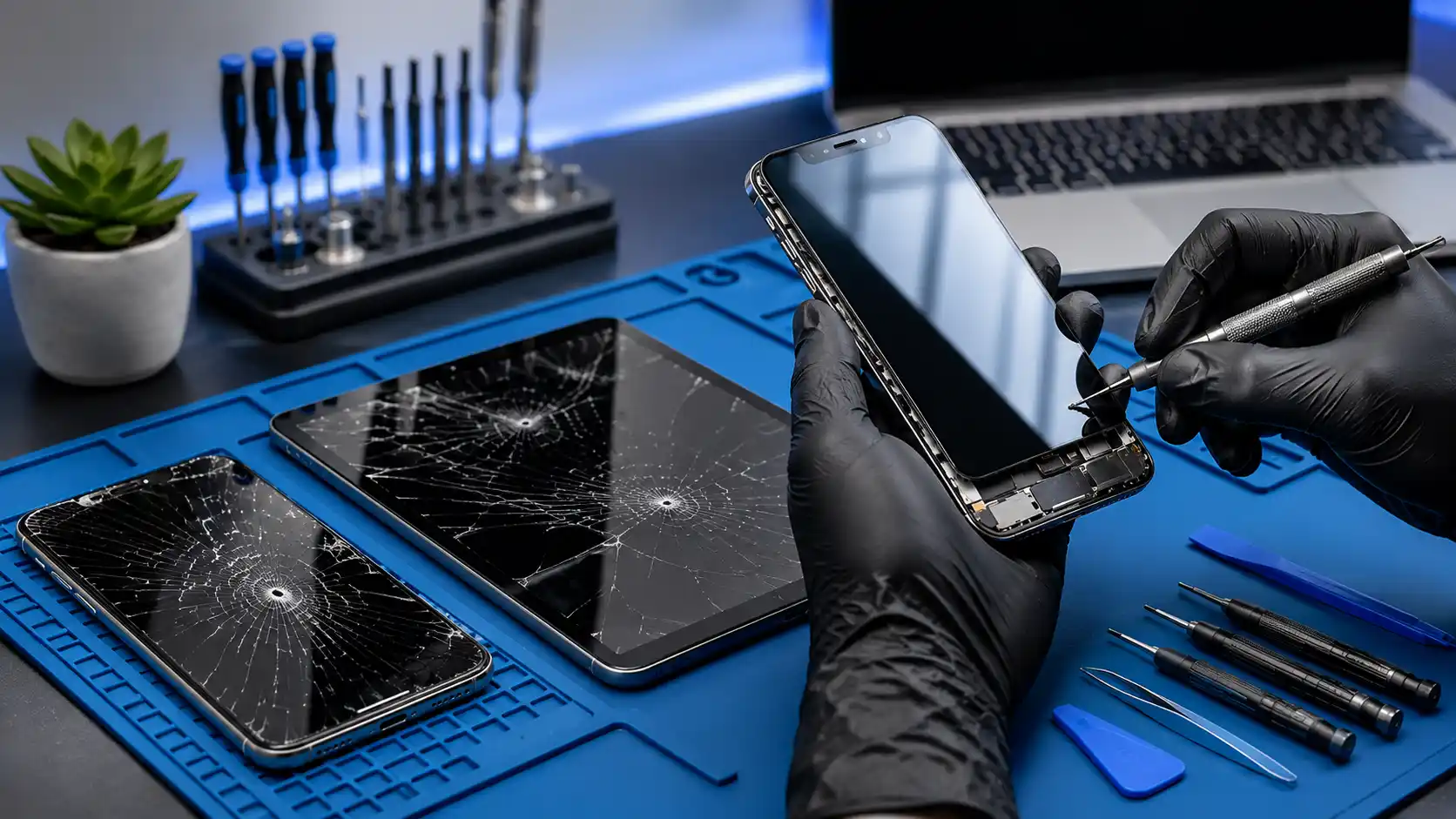
When Does Your Device Need a Screen Replacement? The screen is one of the most frequently used and easily damaged parts of a phone, tablet or laptop. A drop, impact, bent frame, pressure or liquid exposure can damage the outer glass, touchscreen or display panel. Some faults are immediately visible, while others may become more noticeable over time. A damaged screen does not always require replacement, because blank displays and touch problems can also result from loose connectors, software errors or internal component faults. Professional assessment helps identify the cause and prevents unnecessary part replacement. Common Signs of Screen Damage A visible crack is the most obvious sign of screen damage, but it is not the only problem that may require attention. Display faults can affect image quality, touchscreen response and the safe everyday use of a device. Damage may begin in one small area and gradually spread across the display. Coloured lines, flickering, dark patches and ghost touches can indicate that the internal screen assembly has been affected. Common warning signs: Cracked or shattered outer glass Coloured lines across the display Black spots or dark patches Flickering or unstable brightness Unresponsive touchscreen areas Touch inputs occurring automatically Distorted colours or images Completely blank display Cracked Screen Glass A small crack may appear harmless when the display and touch functions still work. However, cracks can spread through regular use, pressure, temperature changes or another minor impact. Damaged glass may also create sharp edges and allow dust or moisture to enter the device more easily. Arranging an assessment early can help determine whether the glass, complete screen assembly or surrounding frame requires attention. Touchscreen Problems A touchscreen may become slow, inaccurate or completely unresponsive after a drop. Some devices also develop ghost touches, where applications open or the screen moves without the user touching it. Touchscreen problems can involve the display assembly, internal connector, software or motherboard. Restarting the device may resolve a temporary software problem, but continuing faults should be professionally diagnosed. Touchscreen symptoms include: Delayed touch response Certain areas do not respond Incorrect letters appear while typing Screen moves without being touched Applications open unexpectedly Touch stops working after impact Coloured Lines and Black Spots Vertical or horizontal lines can appear when the internal display panel is damaged. These lines may remain in one area or spread as the condition becomes worse. Black spots, ink-like marks and coloured patches often indicate pressure or impact damage inside the display. Replacing only a screen protector will not correct damage within the actual display panel. Flickering and Brightness Problems A flickering screen may be caused by a damaged display, loose cable, software setting, graphics fault or power problem. The screen may flicker continuously or only when the device is moved or opened at a particular angle. Brightness problems may include an extremely dim display, uneven lighting or a screen that becomes dark unexpectedly. Accurate testing is needed before deciding whether the screen or another component requires repair. Blank Screen Diagnosis A device with a black screen may still produce sounds, vibrations or notification lights. This can indicate that the device is operating but its display is not showing an image. A blank screen does not automatically mean that the panel requires replacement. The problem may involve the battery, display connector, charging system, graphics hardware, software or motherboard. Useful signs to report to a technician: Device still rings or vibrates Notification sounds continue Display briefly appears during startup Screen works only at certain angles External monitor displays an image Damage began after a drop or spill Phone Screen Replacement Phone screens combine several important functions within a small assembly. Depending on the model, the outer glass, touchscreen and image panel may be bonded together and replaced as one component. Before replacement, the phone should be inspected for frame damage, internal faults and signs of liquid exposure. After installation, the display, touch response, brightness and nearby features should be tested. iPhone Screen Replacement An iPhone screen can develop cracks, touch problems, coloured lines or dark areas following a drop or impact. The surrounding frame should also be examined because a bent frame may prevent the replacement screen from fitting correctly. Replacement options and availability depend on the exact iPhone model. Testing after installation may include display quality, touchscreen response, brightness, cameras, speakers and relevant sensors. Samsung and Android Screen Replacement Samsung Galaxy and other Android phones use different screen sizes, display technologies and connector designs. Identifying the correct brand and model number is important when checking replacement-part availability. Some Android phones use a complete display and frame assembly, while others require the screen to be fitted into the existing housing. The appropriate repair depends on the model, damage and condition of the frame. Tablet and iPad Screen Replacement A damaged tablet screen can affect studying, working, reading and entertainment. Cracked glass may also create sharp edges, while deeper damage can interfere with the touchscreen or image panel. Tablet repairs vary because some models have separate glass and display components, while others use a bonded assembly. The model and extent of damage should be assessed before selecting a replacement option. Laptop Screen Replacement Laptop screens may become cracked, flicker, display coloured lines or remain completely blank. Similar symptoms can also result from display-cable, graphics or motherboard problems. A compatible replacement must match the laptop’s screen size, resolution, connector, refresh rate and mounting design. The exact laptop model and existing panel information help identify the correct component. Screen Damage or Screen-Protector Damage? A screen protector is designed to absorb scratches and minor impacts, so it may crack while the actual display remains undamaged. Carefully viewing the edges of the protector can sometimes help identify which layer is affected. Do not remove badly broken glass if it has sharp edges or appears attached to the damaged display. A technician can inspect the device safely and determine whether only the protector or the complete screen needs replacement. Screen and Frame Damage A bent, dented or uneven frame
Gaming Console – PS4, PS5 & XBOX Repair
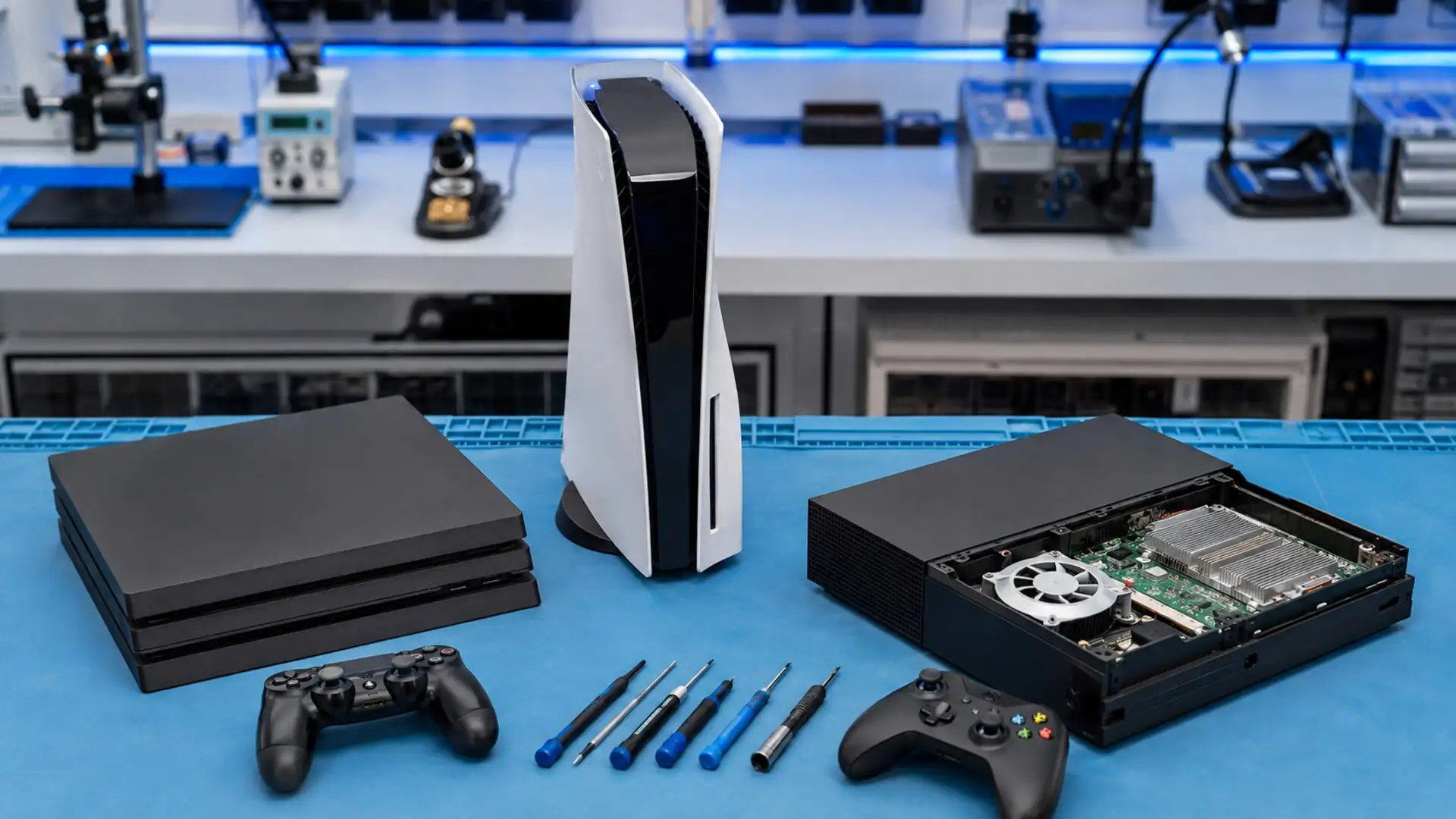
Common Gaming Console Problems and When to Get Professional Help Gaming consoles provide hours of entertainment, but regular use, heat, dust and accidental damage can eventually cause performance problems. A console may stop turning on, overheat, become unusually noisy, lose its display signal or fail to read games properly. Recognising the warning signs early can help prevent a minor fault from developing into a more expensive repair. Some console problems are caused by simple issues such as a loose cable, blocked ventilation or outdated software. Other faults may involve the HDMI port, cooling system, storage drive, power supply or internal circuit board. Proper diagnosis is important because different problems can produce similar symptoms. Console Not Turning On A gaming console that does not turn on may have a damaged power cable, faulty socket, internal power-supply problem or motherboard fault. In some cases, the console may briefly light up or make a sound before switching off again. Check that the external power cable is properly connected and try a known working wall socket. If there is visible damage, an unusual smell, liquid exposure or repeated shutdowns, unplug the console and arrange professional assessment instead of repeatedly attempting to power it on. Common warning signs: No lights or startup sound Console switches off immediately Power light flashes unexpectedly Console only starts occasionally Unusual smell or excessive heat No response from the power button Overheating and Loud Fan Noise Overheating and Loud Fan Noise Gaming consoles generate heat during normal use, particularly when running demanding games. The cooling fan moves heat away from the processor, while ventilation openings allow warm air to leave the console. Dust buildup, restricted airflow or a failing fan can make the console run hotter and louder. Repeated overheating may cause reduced performance, sudden shutdowns or internal component damage. Keep the console on a stable surface with clear space around its vents and avoid placing it inside a tightly enclosed cabinet. Common warning signs: Fan becomes unusually loud Console feels excessively hot Games slow down or freeze Console shuts down during gameplay Hot-air vents have weak airflow Overheating warnings appear HDMI and Display Problems HDMI and Display Problems A console may turn on normally but fail to display an image on the television or monitor. The problem could involve the HDMI cable, display settings, television input, damaged HDMI port or an internal video circuit. Start by checking the television input and testing another suitable HDMI cable or display. If the HDMI port feels loose, looks bent or only works when the cable is held at a certain angle, the port may require professional inspection and repair. Common warning signs: No picture on the display Flickering or interrupted image Distorted colours or visual lines Loose HDMI connection Sound works but the picture does not Display cuts out when the cable moves Disc-Drive and Game-Reading Problems Disc-Drive and Game-Reading Problems Disc-based consoles may stop accepting, ejecting or reading game discs correctly. Dirt, disc damage, alignment problems or faults within the optical drive can cause these issues. Check the disc for fingerprints, scratches or cracks and gently clean it using a soft lint-free cloth. If several clean discs produce the same problem, the console’s disc drive, laser or internal mechanism may need assessment. Common warning signs: Console does not accept discs Disc becomes stuck Games fail to load Unusual clicking or grinding noises Disc ejects unexpectedly Several discs cannot be recognised Storage and Installation Problems Storage and Installation Problems Modern games require a significant amount of storage space. When the internal drive becomes full or begins to fail, the console may experience slow loading, installation errors, corrupted files or missing games. Removing unused games may provide more free space, but repeated storage warnings can indicate a deeper fault. A failing storage drive may require replacement, system restoration or data-transfer assistance. Common warning signs: Games take longer to load Installation repeatedly fails Saved data becomes corrupted Console reports storage errors Games disappear from the library System freezes during updates Software and System-Update Errors Software and System-Update Errors Console software controls game installation, online features, storage and system settings. An interrupted update, damaged system file or network problem can prevent the console from starting or operating normally. Restarting the console and checking the internet connection may resolve minor issues. Avoid disconnecting power while an update is installing. If the console remains stuck in a startup loop or repeatedly displays system errors, professional software diagnosis may be required. Common warning signs: Console becomes stuck during startup Updates fail repeatedly Applications close unexpectedly System menus freeze Error messages continue appearing Games fail after a system update Controller and Connection Problems Controller and Connection Problems Controller problems can involve batteries, charging cables, USB ports, wireless connections, buttons or analogue sticks. Before assuming that the console is faulty, test another compatible controller or cable if one is available. Wireless interference, outdated controller software and damaged charging ports can also affect connectivity. If several controllers fail to connect to the same console, its wireless hardware or software may need further testing. Common warning signs: Controller does not connect Buttons respond incorrectly Analogue sticks move without input Controller disconnects during gameplay Charging is slow or intermittent USB connection does not work USB and Charging-Port Problems USB and Charging-Port Problems Console USB ports are used for controllers, storage devices and other accessories. Repeated plugging, accidental pulling or damaged connectors can make a port loose or unreliable. Avoid forcing a cable into a damaged port because this may bend the internal contacts. If multiple cables fail or accessories disconnect when moved, the USB port or internal connection may need repair. Common warning signs: Controller does not charge USB device is not recognised Cable feels loose inside the port Connection works only at an angle Port appears bent or damaged Accessories disconnect unexpectedly Liquid Damage to Gaming Consoles Liquid Damage to Gaming Consoles Spilled drinks and other liquid exposure can affect the power supply, ports, cooling system and motherboard. A console may